

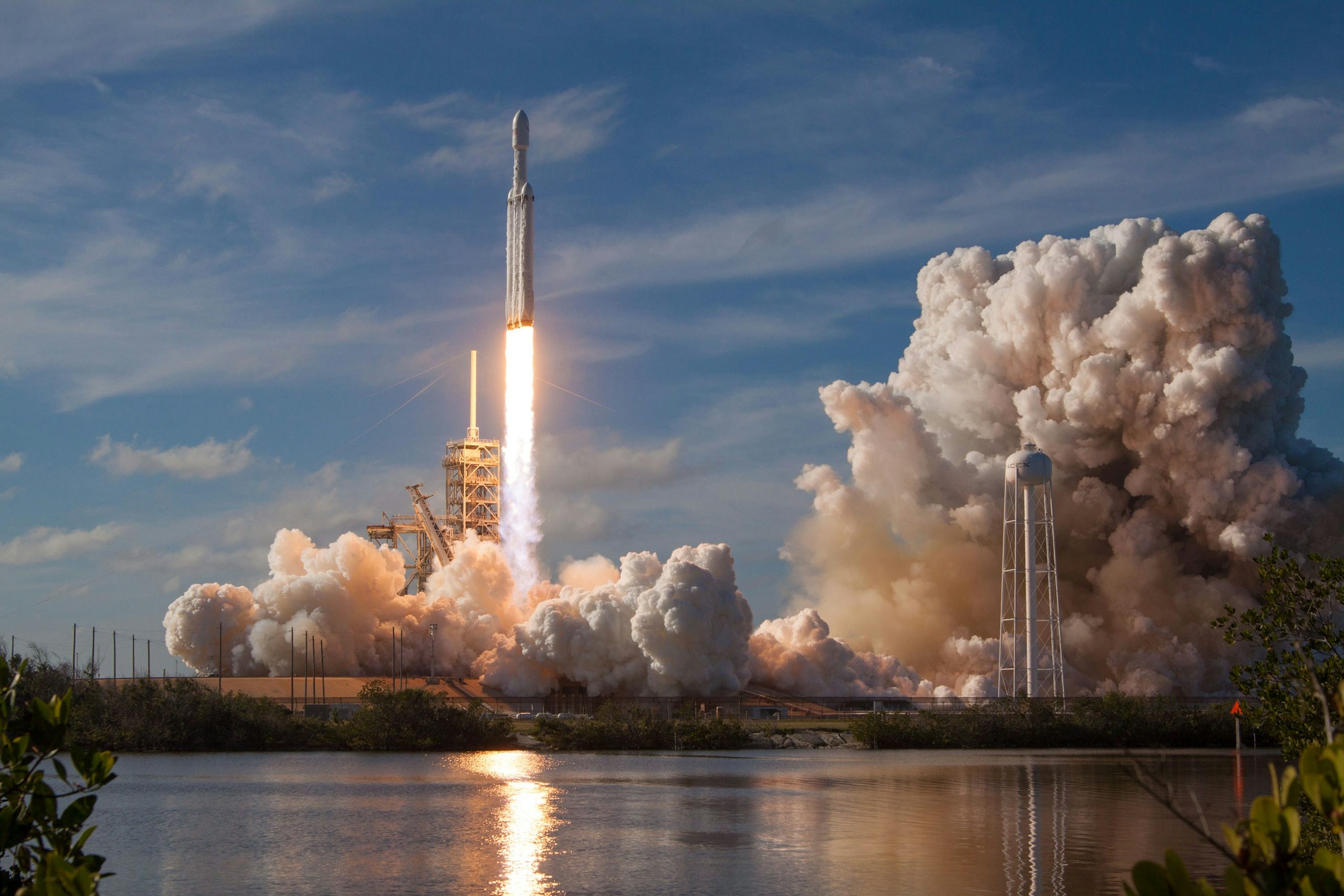
Artificial intelligence is entering a new phase — one where raw computing power may matter just as much as the intelligence of the models themselves. In one of the most talked-about developments in the AI industry this month, Anthropic has reportedly partnered with SpaceX to gain access to the massive “Colossus” AI supercomputer infrastructure powered by more than 220,000 Nvidia GPUs.
This partnership signals something much bigger than a standard business collaboration. It represents the growing realization that the future of AI will be defined not only by algorithms and data, but also by who controls the world’s most powerful computing systems.
The Rise of the AI Infrastructure War
Over the past two years, the AI race has accelerated dramatically. Companies like OpenAI, Google DeepMind, Meta, Microsoft, and Anthropic are competing to build larger, smarter, and more capable AI models.
However, training frontier AI systems now requires enormous amounts of computational power. Modern AI models consume millions of dollars in GPU resources during training, inference, and deployment. As models become multimodal — handling text, images, audio, and video simultaneously — infrastructure demands continue to skyrocket.
This is where the Anthropic and SpaceX partnership becomes extremely important.
The “Colossus” supercomputer is reportedly one of the largest AI computing clusters ever assembled, utilizing over 220,000 Nvidia GPUs. Such infrastructure enables faster model training, larger context windows, more advanced reasoning capabilities, and significantly improved AI performance at scale.
Why Nvidia GPUs Matter So Much
At the center of the AI revolution is Nvidia.
The company’s GPUs have become the backbone of modern artificial intelligence because they are exceptionally efficient at handling the parallel computations required for machine learning. Nearly every major AI company relies heavily on Nvidia hardware to train and run advanced models.
Demand for these chips has become so intense that AI companies are investing billions of dollars into securing long-term GPU access. In many ways, GPUs are becoming the “oil” of the AI economy.
By accessing large-scale GPU infrastructure through SpaceX’s Colossus system, Anthropic gains a major competitive advantage in developing future Claude AI models.
What This Means for Claude AI
Anthropic’s Claude models are already considered among the most capable AI assistants in the industry, especially for reasoning, long-context understanding, coding, and safety-focused AI interactions.
With expanded computational resources, future Claude models could potentially offer:
- Faster response times: Instant generation and reduced latency.
- Improved reasoning accuracy: Solving highly complex logic puzzles.
- Better multimodal capabilities: Analyzing huge video and image files simultaneously.
- More advanced coding assistance: Writing entire codebases autonomously.
- Larger memory and context handling: Remembering vast amounts of documents at once.
- Enhanced enterprise-grade AI tools: Deeper workflow integrations.
More compute often translates directly into smarter and more reliable AI systems.
This could intensify competition with OpenAI’s GPT ecosystem and Google’s Gemini models, pushing the entire industry toward even more rapid innovation.
SpaceX’s Expanding Role in AI
While SpaceX is primarily known for rockets and satellite technology, the company is increasingly becoming part of the broader AI infrastructure ecosystem.
Large-scale data centers, energy systems, networking infrastructure, and high-performance computing are now essential components of the AI economy. Companies with expertise in engineering at massive scale are uniquely positioned to support this transition.
The partnership also reflects a broader trend where technology, aerospace, cloud computing, and artificial intelligence industries are beginning to merge in unexpected ways.
The Bigger Picture: AI’s New Arms Race
The next generation of AI competition may no longer be won solely by the company with the best research team. Instead, success could depend on access to:
- Massive GPU clusters: The hardware doing the heavy lifting.
- Advanced semiconductor supply chains: Ensuring a steady flow of chips.
- Cheap and reliable energy: Powering the massive server farms.
- Global-scale data centers: Housing the compute infrastructure.
- High-speed networking infrastructure: Transferring petabytes of data seamlessly.
This is why companies are investing billions into AI infrastructure projects worldwide. The AI industry is rapidly shifting from a software race into a full-scale infrastructure race.
The Bottom Line
The reported Anthropic and SpaceX collaboration represents more than just another tech partnership. It highlights a major shift in the AI industry — one where infrastructure, computing power, and scale are becoming the foundation of competitive advantage.
As companies race to build increasingly advanced AI systems, access to massive GPU resources could determine who leads the next decade of artificial intelligence.
The future of AI is no longer just about smarter models. It’s about building the machines powerful enough to create them.
What do you think? Will hardware access define the winner of the AI race? Let us know in the comments below!